Edgar Allan Poe
Orphaned at two and raised by a Richmond merchant's family, he wrote "The Raven" and the first detective stories, and died in Baltimore in 1849 of a cause no one has settled.
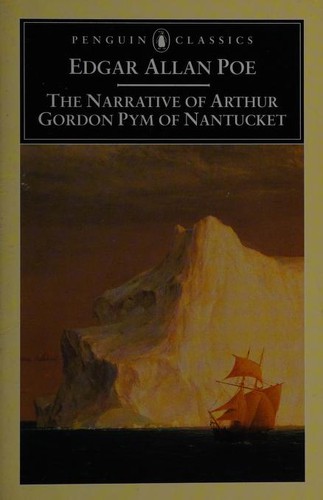
The Narrative of Arthur Gordon Pym of Nantucket
Harper & Brothers published it in New York in 1838, the fourth of the ten books Poe published in his lifetime.2 Netflix's 2023 The Fall of the House of Usher named a character after its narrator.7
Bookshop.org (which supports independent bookstores) and Amazon links are affiliate links: we may earn a small commission on purchases, at no cost to you. As an Amazon Associate we earn from qualifying purchases. WorldCat links find the book in a library near you.
At a glance
- Born
- January 19, 1809, in Boston, to the traveling actors Eliza and David Poe15
- Died
- October 7, 1849, in Baltimore, aged 403
- Raised by
- John and Frances Allan of Richmond, Virginia, who never formally adopted him1
- Education
- University of Virginia (briefly); U.S. Military Academy at West Point1
- Married
- His cousin Virginia Clemm, who died in 18471
Edgar Allan Poe's Backstory
Early life
Edgar Poe was born on January 19, 1809, in Boston, to the traveling actors Eliza and David Poe.15 His father left the family while he was a baby, and his mother died of tuberculosis in Richmond, Virginia, on December 8, 1811, when he was two.1 He was taken in by John and Frances Allan of Richmond, who never formally adopted him; he did not take their surname.1 At 15 he was in a junior honor guard that escorted the Marquis de Lafayette around Richmond.1
University, army and West Point
At 17 Poe went to the University of Virginia. According to the Poe Museum, he arrived with only $110 for his fees, gambled to make up the rest, ran up about $2,000 in debts, and left after a few months.1 In Boston he published his first book, Tamerlane and Other Poems, as “A Bostonian,” and at 18 he enlisted in the army under the name Edgar Perry, rising to sergeant major in two years.1 He then entered the U.S. Military Academy at West Point, where, the Poe Museum says, he did well in his studies but was court-martialed for “extreme dereliction of duty.”1 Two more books of poems followed, in 1829 and 1831.2
Baltimore, Richmond and marriage
Poe spent about four years in Baltimore with relatives, among them his aunt Maria Clemm and her daughter Virginia, and turned from poetry to short stories.1 After the Southern Literary Messenger printed his tales “Metzengerstein” and “Berenice,” its editor, Thomas White, hired him, and Poe moved back to Richmond; the Poe Museum says tensions with White followed, possibly over his drinking.1 About a year after joining the magazine he married his cousin Virginia; she was 13 and he was 27, and the museum notes that the nature of the marriage is debated.1 He left the Messenger in 1837.1
Philadelphia and New York
The years from 1838 in Philadelphia are considered his most productive: stories from that period include “The Fall of the House of Usher,” “The Murders in the Rue Morgue,” “The Tell-Tale Heart” and “The Black Cat.”1 His only completed novel, The Narrative of Arthur Gordon Pym of Nantucket, appeared in 1838, and Tales of the Grotesque and Arabesque, in two volumes, in 1840.2 He is credited with inventing the detective story; Arthur Conan Doyle later called him “the father of the detective tale.”5
“The Raven,” published in early 1845, made him famous; the Poe Museum says he was paid about $15 for it but gained lecturing and recitation work.1 Tales and The Raven and Other Poems were published in New York the same year.2 Virginia died of tuberculosis in New York in 1847, aged 24.1 His last book, Eureka: A Prose Poem, appeared in 1848.2
Death
In 1849 Poe went south to Richmond and became engaged to Elmira Royster Shelton, by then a widow, who had been his fiancée when he went to university.1 He left Richmond by ship for Baltimore on September 27, and his movements are not recorded again until October 3, when he was found delirious at Gunner’s Hall, a Baltimore tavern that was serving as a polling place, wearing someone else’s clothes.13 He died at Washington College Hospital on October 7, 1849, aged 40.3 His doctor recorded delirium tremens, a local paper “congestion of the brain”; there was no autopsy, no death certificate survives, and the cause has never been established.3
Reputation
After his death his rival Rufus Griswold, who became his literary executor, published a biography portraying him as a drunkard and opium addict; Biography.com calls it “libelous,” and National Geographic reports there is no evidence Poe used opium.43 Poe’s stories and poems have been adapted for film and television many times, from Roger Corman’s eight Poe films of the early 1960s to Mike Flanagan’s 2023 Netflix series.87
Fun facts
- His first book, Tamerlane and Other Poems, was credited to "A Bostonian"; only about twelve copies are known to survive.12
- At 18 he enlisted in the army as "Edgar Perry" and rose to sergeant major within two years.1
- At 15 he was part of a junior honor guard that escorted the Marquis de Lafayette around Richmond.1
- He earned about $15 for publishing "The Raven," according to the Poe Museum.1
- The Poe Museum calls him the first American writer to try to live entirely on what he earned from writing.1
- Only 750 copies of Tales of the Grotesque and Arabesque were printed.2
- Arthur Conan Doyle called Poe "the father of the detective tale."5
Books
In order of first publication. Each series is kept together, in reading order, starting where its first book appeared. The ten books Poe published in his lifetime, with publishers and years, as listed by the Edgar Allan Poe Society of Baltimore.2
Bookshop.org (which supports independent bookstores) and Amazon links are affiliate links: we may earn a small commission on purchases, at no cost to you. As an Amazon Associate we earn from qualifying purchases. WorldCat links find the book in a library near you.
- 1827Tamerlane and Other Poems
- 1829Al Aaraaf, Tamerlane, and Minor Poems
Published in Baltimore by Hatch and Dunning.2
- 1831
- 1838
- 1839The Conchologist's First Book
The 1845 third edition dropped his name from the title page.2
- 1840Tales of the Grotesque and Arabesque
Two volumes, published in Philadelphia in a printing of 750 copies.2
- 1843The Prose Romances of Edgar A. Poe
Contains only "The Murders in the Rue Morgue" and "The Man That Was Used Up."2
- 1845
- 1845The Raven and Other Poems
- 1848
Latest news
NPR's Fresh Air critic Maureen Corrigan reviewed Emily Ogden's new book Darkness Becomes Bright: On the Brief Life and Immortal Art of Edgar Allan Poe, a mix of biography and reflection by the University of Virginia professor.5
Filming began in Budapest on A24's The Masque of the Red Death, written and directed by Charlie Polinger, with Mikey Madison, Léa Seydoux, Franz Rogowski and Benedict Wong.6
Adaptations and other media
Film
- House of Usher and the Corman Poe films1960–1964
Roger Corman directed House of Usher (1960) from Richard Matheson's screenplay, with Vincent Price as Roderick Usher; it was the first of eight Poe films Corman made between 1960 and 1964.8
- The Masque of the Red Death (A24)Filmed 2026
Charlie Polinger wrote and directed this adaptation of Poe's 1842 story for A24 and Picturestart, with Mikey Madison, Léa Seydoux, Franz Rogowski and Benedict Wong; no release date has been announced.6
Television
- The Fall of the House of Usher (Netflix)2023Based on The Narrative of Arthur Gordon Pym of Nantucket
Mike Flanagan's miniseries, which Netflix called "a wicked horror series based on the works of Edgar Allan Poe," was released on October 12, 2023; it draws on several stories and names a character after Arthur Gordon Pym.7
Myth and record
The claimPoe drank himself to death in Baltimore. His doctor recorded delirium tremens, and many people who knew him blamed alcohol.3
The recordThe cause of his death is not known. There was no autopsy and no death certificate survives; a local paper gave "congestion of the brain," and the Poe Museum notes that the doctor's term, "phrenitis," was often used when the real cause was unknown.31 The Poe Museum counts more than 26 published theories, among them alcohol, "cooping" (being kidnapped and forced to vote repeatedly), rabies and tuberculosis; National Geographic quotes experts who say, "We just cannot know."13
The claimPoe was a drunk and an opium addict, the picture drawn by the biography his rival and literary executor, Rufus Griswold, published after his death.4
The recordBiography.com calls Griswold's account "libelous."4 National Geographic reports that there is no evidence Poe used opium, that the claim of alcoholism is unproven, and that historians say his behavior, including long periods without drinking, does not fit it.3
Timeline
His mother dies of tuberculosis in Richmond; John and Frances Allan take him in.1
Publishes his first book, Tamerlane and Other Poems, as "A Bostonian," and enlists in the army as "Edgar Perry."12
The Narrative of Arthur Gordon Pym of Nantucket is published; Poe moves to Philadelphia, the start of his most productive years.21
Tales of the Grotesque and Arabesque appears in two volumes.2
"The Raven" makes him famous; Tales and The Raven and Other Poems follow as books.12
His wife, Virginia, dies of tuberculosis in New York, aged 24.1
Found delirious at Gunner's Hall, a Baltimore tavern, wearing someone else's clothes.13
Dies at Washington College Hospital in Baltimore, aged 40.3
A24 begins filming The Masque of the Red Death in Budapest.6
What came after
A24's The Masque of the Red Death, written and directed by Charlie Polinger and filmed in Budapest in 2026, has no announced release date.6
Sources
- Edgar Allan Poe's Biography The Poe Museum, Richmond, VirginiaPrimary record
- Some Editions of Edgar Allan Poe's Works Edgar Allan Poe Society of BaltimoreReference
- Murder or madness: What really killed Edgar Allan Poe? National GeographicNews
- Edgar Allan Poe's death Biography.comReference
- We are still puzzling over the mysteries of Edgar Allan Poe and Arthur Conan Doyle NPR (via KPBS)News
- The Masque of the Red Death (upcoming film) WikipediaReference
- Mike Flanagan's Final Netflix Show Looks Like a Big Departure InverseNews
- House of Usher Il Cinema Ritrovato (Cineteca di Bologna)Website