Frank Herbert
A newspaperman from Tacoma who spent years on a desert-planet epic that about twenty publishers turned down, then saw it become one of the best-selling novels in science fiction.
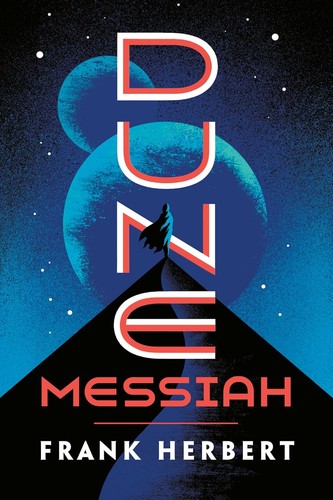
Dune Messiah
The second Dune novel, first published by Putnam in 1969, follows Paul Atreides as emperor while a conspiracy forms inside his own circle.910 Denis Villeneuve's Dune: Part Three, which adapts it, is due in theaters on December 18, 2026.15
Bookshop.org (which supports independent bookstores) and Amazon links are affiliate links: we may earn a small commission on purchases, at no cost to you. As an Amazon Associate we earn from qualifying purchases. WorldCat links find the book in a library near you.
At a glance
- Born
- Franklin Patrick Herbert Jr., October 8, 1920, in Tacoma, Washington41
- Education
- Attended the University of Washington after the Second World War but did not graduate46
- Day jobs
- Reporter, photographer and editor on West Coast newspapers; political speechwriter in the 1950s32
- Full-time novelist
- From the end of 19724
- Died
- February 11, 1986, in Madison, Wisconsin, aged 6516
- Major awards
Frank Herbert's Backstory
Early life
Franklin Patrick Herbert Jr. was born on October 8, 1920, in Tacoma, Washington.41 Kirkus Reviews says he decided to become a writer at eight, and as a teenager he wrote for the Tacoma Ledger.6 In 1938 he moved to Salem, Oregon, to live with an aunt and uncle, and he finished high school there in 1939.2
Newspapers and the Navy
He worked for newspapers up and down the West Coast as a reporter, photographer and editor, among them the Oregon Statesman, the Seattle Post-Intelligencer and the San Francisco Examiner.32 He joined the Navy in 1942 and was discharged after a head injury, then attended the University of Washington without graduating.46 His first science-fiction story, “Looking for Something,” appeared in Startling Stories in 1952, and his first novel, a submarine thriller, was published as The Dragon in the Sea in 1956.63 In the 1950s he also wrote campaign speeches for Oregon Republicans.2
Dune
The novel began with research for an article about a U.S. Department of Agriculture project planting grasses to hold back drifting dunes near Florence, Oregon.62 The article was never finished, but the material led to a desert planet he named Arrakis.24 Analog serialized “Dune World” from December 1963 to February 1964 and “The Prophet of Dune” in 1965.6 Publishers repeatedly turned down the book, which editors found too complex, until Sterling E. Lanier of Chilton Books, a company known for auto-repair manuals, bought it.276 Chilton published Dune in 1965; it won the Nebula Award and the Hugo Award, which it shared with Roger Zelazny.724
The sequels
Sales built slowly, helped by Ace’s paperback, and by the time Children of Dune appeared in 1976 the series was a bestseller.76 He wrote six Dune novels in all, ending with Chapterhouse: Dune in 1985, and many other novels, among them The Dosadi Experiment and three books with Bill Ransom.13 He lectured at the University of Washington in the early 1970s and became a full-time novelist at the end of 1972, later dividing his time between Hawaii and Port Townsend, Washington.34
Later years and death
He married three times; his second wife, Beverly, with whom he had two sons, including the novelist Brian Herbert, died in 1984.64 He died on February 11, 1986, in Madison, Wisconsin; Kirkus and Wikipedia report the cause as a pulmonary embolism after surgery for pancreatic cancer.164 Brian Herbert and Kevin J. Anderson have continued the Dune saga since 1999, beginning with Dune: House Atreides.1
Fun facts
- He sold his first story, a Western, under a pen name when he was 17.2
- Dune grew out of research for a magazine article on a federal project to stop sand dunes near Florence, Oregon, from drifting; he chartered a plane to see them, and the article was never finished.62
- Chilton, which was known for auto-repair manuals, printed 2,200 copies of Dune as its first novel.7
- He was paid a $7,500 advance for Dune.6
- Sales were slow at first, and the Chilton editor who bought the book, Sterling E. Lanier, was dismissed.78
- Ace's 1967 paperback of Dune cost 95 cents.6
- In the 1950s he wrote speeches for Oregon Republicans, including Senator Guy Cordon's reelection campaign.2
- While researching Soul Catcher, he burned his first draft and rewrote it.2
- In 2019 Tacoma opened the Dune Peninsula and the Frank Herbert Trail.4
Books
In order of first publication. Each series is kept together, in reading order, starting where its first book appeared. Titles and first-publication years from the Contemporary Authors bibliography on Encyclopedia.com, checked against Tim O'Reilly's bibliography and Wikipedia; books published after his death are from Wikipedia.354
Bookshop.org (which supports independent bookstores) and Amazon links are affiliate links: we may earn a small commission on purchases, at no cost to you. As an Amazon Associate we earn from qualifying purchases. WorldCat links find the book in a library near you.
- 1956The Dragon in the Sea
His first novel; also published as Twenty-first Century Sub and Under Pressure.3
Dune
Read in publication order.12
- 1965
- 1969
- 1976
- 1981
- 1984
- 1985
- 1966
- 1979Book 2The Jesus Incident
- 1983Book 3The Lazarus Effect
- 1988Book 4The Ascension Factor
- 1966The Eyes of Heisenberg
- 1966The Green Brain
- 1968The Heaven Makers
- 1968The Santaroga Barrier
ConSentiency
- 1970Book 1Whipping Star
- 1977Book 2The Dosadi Experiment
- 1970
- 1970
- 1970The Worlds of Frank Herbert
- 1972
- 1972The Book of Frank Herbert
- 1972The Godmakers
- 1973Hellstrom's Hive
- 1973Threshold: The Blue Angels Experience
A companion to a documentary about the Navy's Blue Angels flight team.5
- 1974The Best of Frank Herbert
- 1980Direct Descent
- 1980The Priests of Psi
- 1981Nebula Awards Fifteen
- 1981Without Me You're Nothing: The Essential Guide to Home Computers
- 1982The White Plague
- 1985
- 1986Man of Two Worlds
- 1992The Songs of Muad'Dib
His poetry, edited by Brian Herbert after his death.3
- 2012
- 2013
- 2013
- 2014
Latest news
Adaptations and other media
Film
- Dune1984Based on Dune
A Universal Pictures film written and directed by David Lynch, with Sting as Feyd-Rautha.13
- Dune2021Based on Dune
A Warner Bros. film directed by Denis Villeneuve, released as Dune: Part One.13
- Dune: Part Two2024Based on Dune
Villeneuve's second film, continuing the story of Dune.13
- Dune: Part Three2026 (scheduled)Based on Dune Messiah
Announced by Warner Bros. and Legendary for December 18, 2026, directed by Villeneuve, who co-wrote it with Brian K. Vaughan.1514
Television
- Frank Herbert's Dune2000Based on Dune
A Sci-Fi Channel miniseries.13
- Frank Herbert's Children of Dune2003Based on Dune Messiah and Children of Dune
A Sci-Fi Channel miniseries covering Dune Messiah and Children of Dune, with James McAvoy as Leto II.13
Video and tabletop games
Myth and record
Timeline
Born in Tacoma, Washington.1
Joins the U.S. Navy; a head injury leads to a medical discharge.42
His first science-fiction story, "Looking for Something," appears in Startling Stories.6
His first novel, The Dragon in the Sea, is published by Doubleday.3
Analog begins serializing "Dune World."6
Chilton Books, a publisher of auto-repair manuals, publishes Dune.76
Dune wins the Hugo Award for Best Novel.6
Putnam publishes Dune Messiah.9
Children of Dune is published and becomes a bestseller.6
David Lynch's film of Dune is released by Universal.13
Chapterhouse: Dune, the last Dune novel he wrote, is published.1
Denis Villeneuve's Dune is released by Warner Bros.13
Dune: Part Three, adapting Dune Messiah, is scheduled to open in theaters.15
What came after
Dune: Part Three is scheduled for December 18, 2026.15 His son Brian Herbert and Kevin J. Anderson continue the saga in their own novels, drawing on his notes.41
Sources
- Frank Herbert Encyclopaedia BritannicaReference
- Franklin Patrick Herbert Jr. (1920–1986) The Oregon Encyclopedia (Oregon Historical Society)Reference
- Herbert, Frank 1920–1986 Encyclopedia.com (Contemporary Authors)Reference
- Frank Herbert Wikipedia (January 2024 copy)Reference
- Frank Herbert bibliography Tim O'ReillyReference
- Frank Herbert's Epic Dune Series Kirkus ReviewsNews
- How to Fix Your Ornithopter: The Unlikely Publishing History of Dune Science Fiction and Fantasy Writers AssociationWebsite
- Nobody Wanted To Publish Dune Except A Car Repair Manual Company JalopnikNews
- Herbert, Frank (1969) 'Dune Messiah', US signed first edition First and Fine (rare book dealer)Website
- Dune Messiah Penguin Random HousePrimary record
- Dune Messiah (Movie Tie-In) Penguin Random HousePrimary record
- Dune series Penguin Random HousePrimary record
- Every Dune Movie And TV Show Adaptation, Ranked /FilmNews
- Dune: Part Three: Release date, plot, cast & everything we know Space.comNews
- 'Dune 3' Trailer: Timothée Chalamet Is Back for a Grand Finale TheWrapNews
- Dune Awakening Will Feature Music From The Classic Dune And Dune II Games WorthPlayingNews
- Over 189,000 Concurrent Players: Dune: Awakening Begins on The Golden Path FuncomPrimary record